If you’ve ever tried to launch a digital product, a coaching offer, or a SaaS subscription, you already know the truth: a good video sales letter can do more for your conversion rate than a month of paid traffic optimization. VSLs have been the quiet workhorse of online sales for over a decade, and in 2026 they’re more relevant than ever — partly because AI has finally made them accessible to people who don’t have a videographer on speed dial.
In this guide, I’ll walk you through what makes a VSL convert in 2026, how to build one without filming yourself, and the tools that have genuinely changed the game for solo founders and small marketing teams.
Why VSLs Still Outperform Almost Every Other Sales Format
There’s a reason video sales letters keep showing up on high-converting landing pages year after year. They combine storytelling with strategic messaging in a way that text-based sales pages just can’t match — the viewer hears your tone, sees the proof, and follows the emotional arc you’ve designed. That combination builds trust faster than almost any other format on the internet.
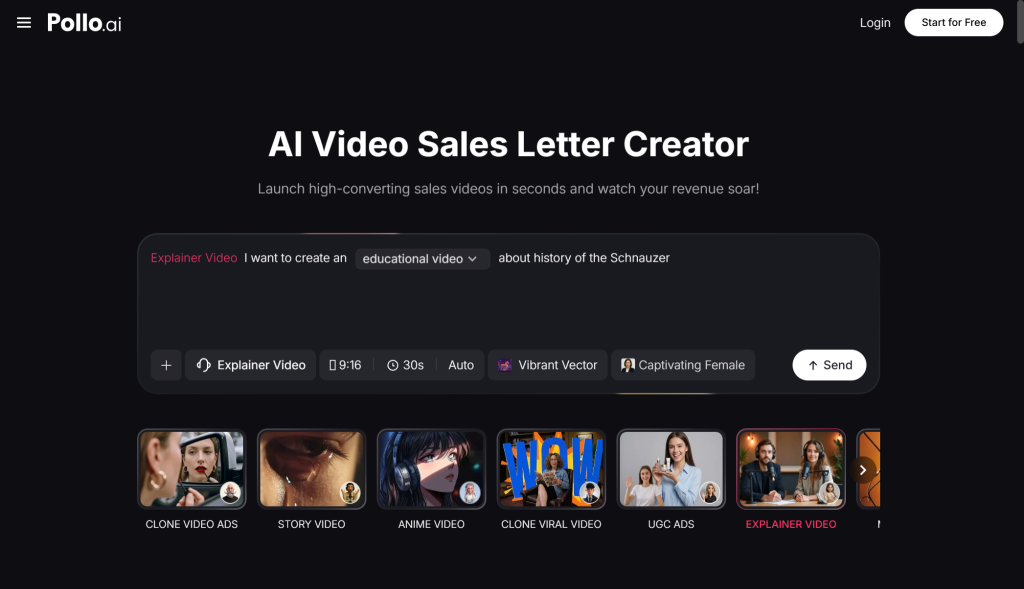
What’s changed in 2026 isn’t the psychology behind VSLs — that’s been stable for years. What’s changed is the production cost. A few years ago, a polished VSL meant hiring a copywriter, a voiceover artist, and an editor. Today, you can produce something equally persuasive in an afternoon using the right AI stack. The best entry point I’ve found is Pollo AI’s AI Video Sales Letter Creator, which lives inside their Marketing Studio. You feed it your offer details, your target audience, and a rough script (or let the system draft one for you), and it returns a fully edited VSL with avatar delivery, captions, B-roll, and music — no recording required. For small businesses that have been priced out of professional video, this is a genuine inflection point.
The Anatomy of a 2026-Style VSL
Modern VSLs look nothing like the long, slide-deck-style videos that dominated 2018. Attention spans have shifted, and so has the format. Here’s what’s actually working right now:
A 7-second hook, not a 30-second one. The old advice was to spend the first 30 seconds agitating a problem. That doesn’t work anymore. You need to land your hook — a bold claim, a surprising statistic, or a polarizing question — within the first seven seconds, or the viewer is gone.
Avatar-led delivery for trust, not just convenience. AI avatars have crossed the uncanny valley for most viewers in 2026. A well-produced avatar VSL now performs nearly as well as a human-recorded one, especially for cold traffic where the viewer has no existing relationship with the brand.
Pattern interrupts throughout the body. Static talking-head VSLs lose retention fast. The best-performing ones cut between the presenter, on-screen text, B-roll, customer testimonials, and product screenshots every 8–12 seconds.
A specific, time-bound CTA. “Click below to learn more” is dead. “Book a call this week and I’ll personally review your funnel” converts. Specificity wins.
Building Your VSL Workflow in Under Two Hours
Here’s the workflow I’ve been recommending to clients and solo operators in 2026. It assumes you’re starting from zero and want a complete, ready-to-publish VSL by the end of the day.
Start with the offer audit. Before you write a single line, get clear on three things: who exactly this is for, what specific transformation you’re promising, and why someone should buy from you instead of a competitor. If you can’t answer these in one sentence each, no AI tool will save you.
Next, draft the script. Use a proven framework — PAS (Problem, Agitate, Solution), AIDA, or the classic “Story-Slide-Sell” structure. Keep the total length between 5 and 12 minutes for high-ticket offers, or 90 seconds to 3 minutes for low-ticket impulse buys.
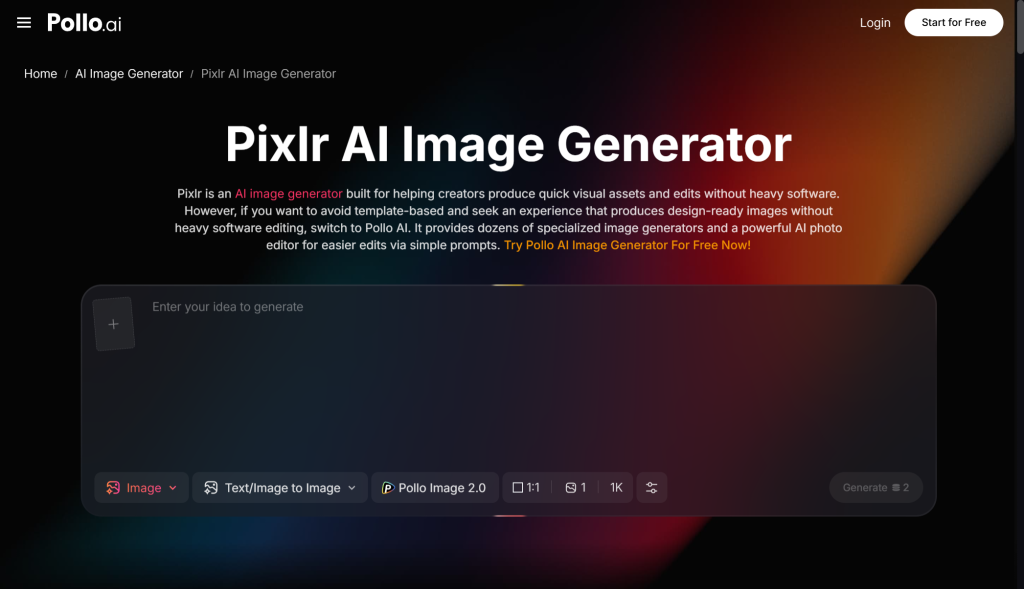
Now move to production. This is where Pollo AI’s Marketing Studio earns its keep. You can generate the avatar delivery, swap in B-roll, add captions, and tweak pacing all in one interface. If your VSL also needs supporting visuals — custom thumbnails, slide graphics, or branded overlays — Pollo AI integrates Pixlr AI into the same workspace through its Design Studio, so you can polish your imagery without exporting to a separate tool. The shared credit system across Pollo AI’s studios means you’re not juggling five subscriptions to ship one campaign, which is honestly the part that saves the most time in 2026.
Finally, test before you scale. Run your VSL on a small ad budget — even $50 — and watch the retention curve. If viewers drop off in the first 10 seconds, your hook is broken. If they drop off mid-way, your story is too slow. The data tells you exactly what to fix.
Where Most VSLs Go Wrong
The biggest mistake I see in 2026 is treating AI-generated VSLs as finished products. The tools are powerful, but they need a human editor at the end of the process. Watch your draft with fresh eyes the next morning and cut anything that feels generic, repetitive, or off-brand.
The second mistake is over-relying on the avatar. Even with great AI delivery, a VSL that’s just a talking head for eight minutes will underperform. Cut to product demos, customer screenshots, social proof, and real-world footage as often as possible.
The third mistake is ignoring the landing page around the VSL. A great video on a weak page still converts poorly. Make sure your headline, CTA button, and order form are all aligned with the promise in the video itself.
When to Use a VSL vs. Other Formats
VSLs aren’t the right answer for every offer. They work best for considered purchases — coaching, courses, software demos, agency services — where the buyer needs to understand the value before they’re willing to commit.
For impulse purchases or low-ticket physical products, short-form vertical videos on TikTok and Reels usually outperform long VSLs. For B2B enterprise sales, a personalized video to a single prospect will beat a generic VSL every time.
The sweet spot for AI-generated VSLs in 2026 is the $97–$2,000 price range, where the offer is too expensive to buy on impulse but not so expensive that the buyer needs a full sales call.
Final Thoughts
Video sales letters have quietly become one of the highest-leverage assets a small business can build in 2026. The format works, the psychology is proven, and AI has finally removed the production bottleneck that kept most founders out of the game. Tools like Pollo AI bundle the entire workflow — script, avatar, visuals, editing — into one credit system, so you can focus on the offer and the message instead of fighting your tools. Build one VSL this month, test it, refine it, and you’ll likely have your most reliable sales asset of the year.