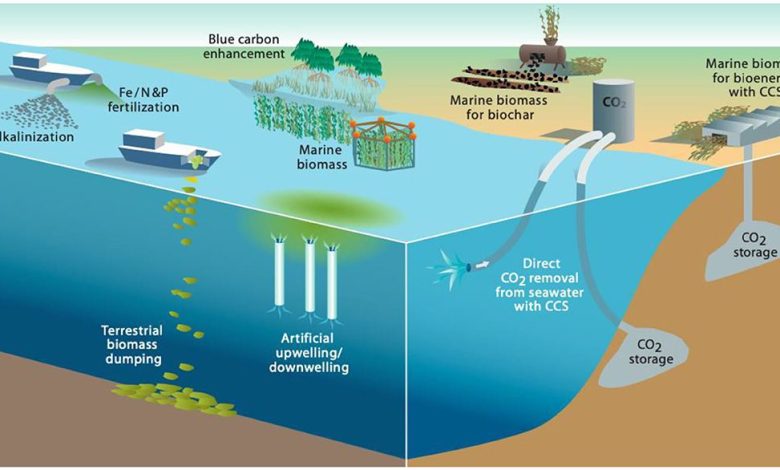
Nearly every credible path to limiting warming now includes something the climate conversation long treated as a distraction: deliberately removing carbon dioxide from the air. Carbon removal has moved from whitepapers to steel in the ground — direct-air-capture plants humming in Iceland and Texas, crushed rock spreading on farmland, biochar kilns, and ocean-based pilots. Readers of climate technology coverage are watching an industry being invented in real time, with all the mess that implies.
The scale gap is sobering. Humanity emits roughly 40 billion tonnes of CO2 a year; engineered removal today is measured in tens of thousands of tonnes. Even optimistic roadmaps need removal to reach billions of tonnes annually by mid-century to balance the hardest emissions — aviation, cement, agriculture — and to begin drawing down historical accumulation. The assessment literature, including the IPCC mitigation report, treats removal as a complement to rapid emissions cuts, never a substitute.
The Portfolio Takes Shape
Different methods occupy different niches. Direct air capture is measurable and permanent but energy-hungry and expensive. Enhanced rock weathering is cheap per tonne and helps soils, but verifying the chemistry is tricky. Reforestation is beloved and necessary, yet vulnerable to fire and reversal. Ocean methods are enormous in potential and least understood. Serious buyers — tech firms, airlines, banks — now purchase portfolios across methods, paying early prices to pull costs down the learning curve.
Verification is becoming the industry’s backbone: registries, measurement standards and satellite monitoring to prove a tonne claimed is a tonne stored. Without that trust layer, removal credits risk repeating the offset market’s credibility crises.
The Honest Position
Who Pays, and Why They Keep Paying
The demand side is the experiment’s most interesting variable. Early buyers paid extraordinary prices per tonne — hundreds of dollars, sometimes near a thousand — functioning less as customers than as patrons of a learning curve. The question hanging over the industry is whether that patronage survives contact with ordinary procurement: whether removal becomes a standard line in corporate climate budgets, a compliance commodity under government mandates, or a stranded fashion of the ESG era.
The signs are cautiously structural. Advance market commitments have pooled billions to guarantee demand for early supply. Jurisdictions are folding removal into emissions trading systems and carbon border rules. And the cheapest tonnes — from biomass, weathering and well-managed soils — are beginning to clear at prices that resemble policy rather than philanthropy. Industries are not built on virtue; they are built on obligations and curves. Carbon removal is acquiring both, tonne by verified tonne.
Carbon removal is neither saviour nor scam; it is a waste-management service for the sky that the world will need at scale. The question of the decade is whether deployment can grow faster than the problem — and whether the public money and private demand arrive in time to find out.