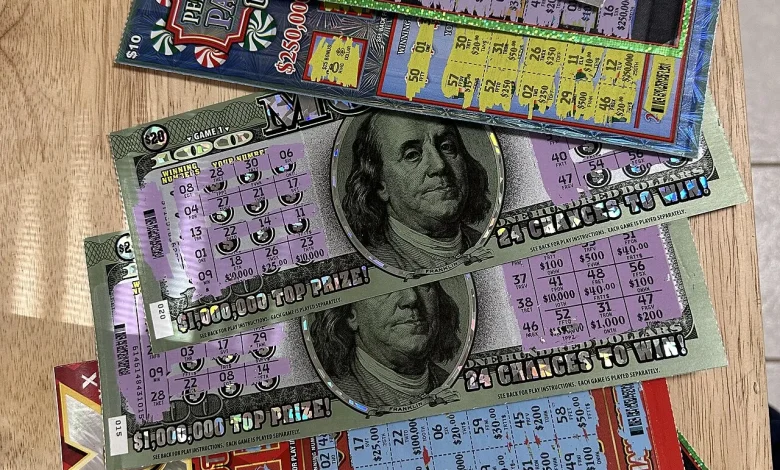
Every big Powerball winner faces the same photograph problem: the advertised jackpot — $562 million in October’s run — describes a prize nobody is offered in a single payment. The cash option, the amount actually available at once, is dramatically smaller, and that is before tax takes its share of whichever route is chosen. Our finance coverage unpacks the two separate haircuts, because confusing them is the most common jackpot misunderstanding.
The first haircut is timing, built into the prize’s design. The second is tax, built into the law. They stack, and a winner who understands both stops being surprised by either.
Haircut one: money now versus money over decades
The advertised figure is the total of annuity payments spread over roughly three decades. That total can be paid because the prize fund invests the cash pool and lets returns accumulate across those years. The lump sum is simply that underlying cash pool today — smaller on paper, equivalent in the cold arithmetic of finance, as the official Powerball prize information outlines.
Calling the difference a ‘penalty’ is therefore a category error, though an understandable one: the same prize is being described in two different units, future payments versus present money. Winners comparing the two numbers side by side without adjusting for time are comparing an orchard’s thirty harvests with the price of the orchard.
Haircut two: tax on whichever you choose
Tax does not care which description a winner prefers. Lottery winnings are taxable income: the lump sum is taxed in the year received, the annuity in annual slices, with federal withholding taken up front and state rules adding their own layer. The IRS guidance on gambling income is unambiguous that the advertised prize and the taxable prize are different conversations.
Because a single lump sum lands in the top tax bracket all at once, while annuity payments arrive across years and possibly changing circumstances, the after-tax comparison can differ from the pre-tax one — another reason the decision belongs to advisers with calculators, not to the emotional arithmetic of the winning night.
Why most coverage skips the fine print
Headlines prefer the largest number, lotteries advertise it, and the two haircuts live in paragraphs nobody reads aloud. The result is a public that systematically overestimates what winners receive — and a recurring crop of stories about winners ‘losing’ money that was never, in present-value or after-tax terms, theirs to lose.
None of this makes a jackpot small. Even after both haircuts, a prize like October’s transforms a family’s finances across generations. It simply transforms them at a different scale than the billboard promised — a distinction that matters enormously to the one household doing the planning.
Reading any jackpot like an accountant
The durable habit is to translate automatically: advertised means annuity, pre-tax, over decades. Cash means present value, still pre-tax. Yours means either figure after federal and state tax, under your circumstances. Three numbers, three meanings, and only the third belongs in a budget.
The lump sum looks smaller for a reason — two reasons, in fact, both knowable in advance and neither one a trick. Winners who learn them before the draw plan well. Winners who learn them from the cheque tend to plan twice.
Three numbers to keep
Keep the translation habit from this article and every future jackpot becomes legible: the advertised total (annuity, pre-tax, decades), the cash value (present money, still pre-tax), and your value (either, after your taxes). Journalists will keep leading with the first because it is the largest; lotteries will keep advertising it for the same reason. Winners, uniquely, cannot afford the confusion — and after the two haircuts explained here, they no longer need to suffer it.
One more wrinkle deserves a place in the fine print: state rules differ not only in rates but in whether the tax is withheld at payout or settled later, and a winner who moves states between winning and filing can complicate the picture further. It is one more reason the cheque photo, however joyful, is the beginning of the paperwork rather than the end of it.