Did you know that 75% of the urban consumers now rely on the delivery apps for food, grocery and parcel services? This is a major change, not just a mere adjustment it’s a rewrite of the way people think businesses should work. Customers are quietly moving towards other applications that already provide delivery and it’s only getting bigger.
This article takes you through the process of adding a reliable delivery feature; the process of picking a model, designing an experience people can trust. At the end, you’ll be in no doubt which of the methods works best for your business after spending months and weeks of costly trial and error.
Choosing Your Delivery Model
When designing, choose a delivery management solution that is realistic for your business, not just ambitious. This one decision makes the other ones related to tech stack, hiring requirements and launch date. If you get it wrong, then you end up with the core logic rebuilt six months in, just as you should be scaling.
There are three options for delivery: in-house delivery; third-party couriers or a combination of both. In-house provides complete control, but is a significant investment. Couriers run quickly, but restrict your involvement in experience. For growing teams, a hybrid approach may be a good mix.
| Model | Cost | Control | Speed to launch |
| In-house delivery | High | Full | Slow |
| Third-party couriers | Low–Medium | Limited | Fast |
| Hybrid model | Medium | Partial | Medium |
Building the Core Features
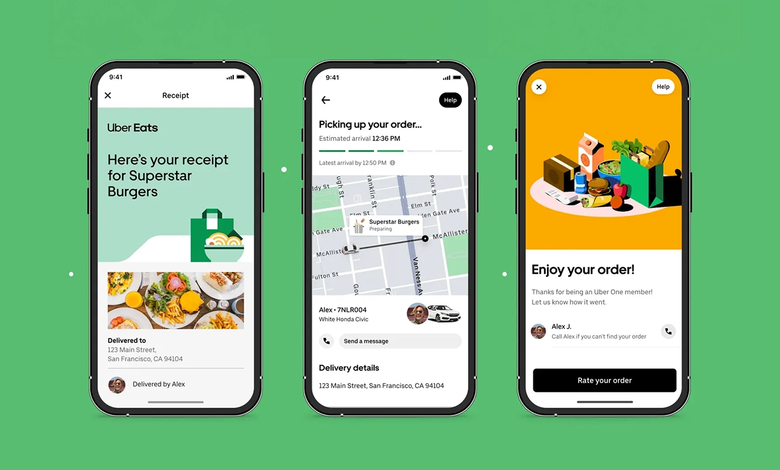
After the model is locked in, the attention becomes directed toward the customers’ interaction with your model. Real-time tracking is no longer a ‘nice to have’ but a must-do as people constantly check it after an order is placed. Even when it’s delivered on time, a silent tracking screen can be a demise to trust.
Industry statistics say the food delivery application sector is an ever-rising business that will attain $213 billion by 2030. The features listed below are no longer extras, but a minimum requirement:
- Live GPS tracking with honest ETAs
- Automated driver or courier assignment
- In-app order status notifications
- A simple, visible cancellation option
Designing for Trust, Not Just Function
Trust failures occur more frequently than technology failures and early on, that is a greater concern for most teams than they imagine. When a user is unsure about the order, he/she will leave the application well before realizing there is a bug in it. Perception is quicker than any code ever.
I’ve experienced this in a retail customer who had a great delivery feature implemented, but the drop-off remained high until the delay alerts feature was added in. When your Meta App Design is the same on screens there’s no friction involved in your users’ experience, no need for a user to second guess each and every tap.
Pricing Your Delivery Service Right
No matter how smooth the tracking feels, getting the price wrong can ruin everything else that you’ve accomplished. Prices are too high and customers go to the competitor who can deliver the product for a lower price. If you undercharge then you’ll lose margin as fuel and courier bills continue to increase over time.
A lot of companies are trying out dynamic delivery pricing, where they charge more or less depending on how far the delivery has to go as well as demand or the time of day. Some offer packages on a subscription basis, which reduces the impact of the delivery.
No matter which way you go you must have transparency as this is the most important factor, customers will pay more if they are not charged hidden fees.
Testing Before You Fully Launch
Taking the short-cut of not testing in the real world is the quickest way to lose months of careful planning. GPS issues, minor problems during the weather and app crashes are not unusual edge cases, and they will test you on week one no matter how spot-on your demo was on the inside. Problems will be revealed only under real conditions.
Do a soft launch with a small number of people first, and then expand. They work out their complaints, no matter how insignificant they may seem, direct to what actually needs to be done before the complete public roll-out will be available to all.
Marketing Your New Delivery Feature
Creating the feature is just half of the equation, customers need to be aware of it. If a launch appears in a “note” in the update, it is ignore-d. Make sure that all current users know of the changes, with a clear announcement in your app, social media and email.
To make it more attractive to use the service the first time, try to give a discount for the initial purchase or allow free delivery for a limited time. Your customer’s future deliveries will be influenced by their initial experiences, so set up a smooth experience, make it memorable and encourage them to repeat the positive experience.
Conclusion
When it comes to adding delivery to your app, it’s about choosing the right model, creating trustworthy features, setting up a reasonable price, testing extensively, and marketing it properly. Miss a step and you’ll end up losing users and getting a lot of refunds. If it’s correct, customers will be kept because it gets them their product.