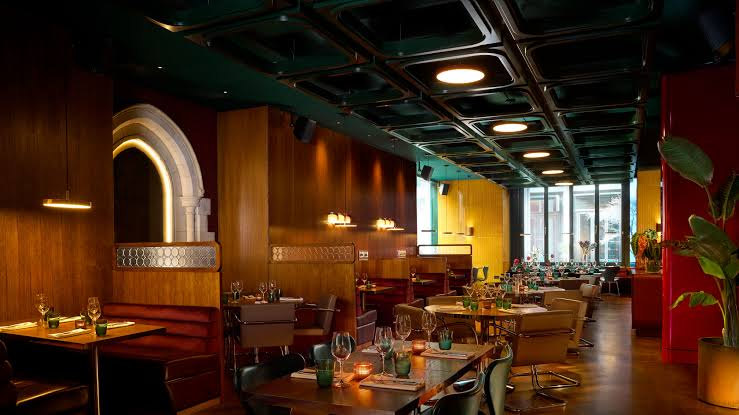
London has no shortage of restaurants, but the places worth remembering usually have something more distinctive going on. It might be a chef-led kitchen with a very particular culinary point of view, a restaurant where the setting is inseparable from the food, or a destination outside the capital that makes the journey worthwhile.
That’s what makes restaurant discovery interesting. The strongest places aren’t necessarily trying to appeal to everyone. They know what they do well and build the experience around it.
From elegant London dining rooms to a Pan-Asian restaurant in Poole and a country pub beside Windsor Great Park, here are restaurants worth putting on your radar.
1. Petersham Nurseries Restaurant, Richmond
Some restaurants are defined as much by their surroundings as by what arrives at the table. Petersham Nurseries Restaurant is one of those places.
Set on Church Lane in Richmond, the restaurant sits within the wider Petersham Nurseries environment, alongside its garden nursery, Teahouse and other lifestyle spaces. The result is an experience that feels removed from conventional London dining, despite being within Greater London.
The food philosophy is particularly interesting. Petersham Nurseries places provenance, seasonality and simplicity at the centre of its cooking. The restaurant works with organic British suppliers and its own Haye Farm in Devon, while seasonal changes influence what appears on the menu. The kitchen deliberately avoids overwhelming quality ingredients with heavy sauces or unnecessary complication.
That philosophy extends beyond the plate. The business has a longstanding connection with horticulture and sustainable food production, and the Richmond restaurant has held a Green Michelin Star for five consecutive years, according to the restaurant.
The physical setting is perhaps its biggest differentiator. Dining among greenery and horticultural spaces gives the meal a slower, more immersive quality. It also makes Petersham a particularly interesting choice for someone who wants a restaurant visit to feel like an outing rather than simply a reservation.
Best features:
- Garden and greenhouse surroundings
- Strong seasonal and provenance-led cooking
- Produce sourced from British suppliers and Haye Farm Devon
- Green Michelin Star
- Restaurant, nursery and Teahouse experience in one destination
- Private dining spaces within the greenhouses
2. Drgnfly, Poole
Moving beyond London, Drgnfly offers a completely different dining proposition.
Its flagship restaurant is in Ashley Cross, Poole, close to Poole Harbour and the Sandbanks peninsula. The restaurant describes its approach as Pan Asian-inspired cuisine paired with a distinctive, polished environment.
The menu is where the concept really comes into focus. Rather than concentrating on one national cuisine, Drgnfly brings together influences from across Asia. Its current offering includes separate à la carte, sushi and dessert menus, giving diners several routes through the restaurant’s food style.
The sushi element adds another layer to the experience, while the broader menu allows the kitchen to move between different Asian flavours and techniques. That gives the restaurant considerably more range than a narrowly defined cuisine-led venue.
The setting is equally deliberate. Drgnfly describes itself as offering a memorable experience in an elegant environment, and the restaurant’s presentation, dining room and menu are designed to work together rather than treating food as the only attraction.
Its location also matters. Being in Ashley Cross, within reach of Poole Harbour and Sandbanks, makes Drgnfly particularly relevant for visitors exploring Dorset who want something more contemporary than a conventional seaside meal.
Best features:
- Pan Asian-inspired menu
- Dedicated sushi offering
- Contemporary restaurant setting
- Located in Ashley Cross
- Close to Poole Harbour and Sandbanks
- Seasonal boxes and platters available through Drgnfly To-Go
3. The Wolseley, Piccadilly
Back in central London, The Wolseley represents a very different kind of restaurant experience.
Its location on Piccadilly is part of the attraction. This is a restaurant built around a sense of occasion, with a grand dining room that makes even a relatively straightforward meal feel more significant.
The Wolseley’s strength is its breadth. It works across breakfast, lunch, afternoon dining and dinner rather than being dependent on a single signature style. That versatility has helped establish it as one of London’s most recognisable restaurant institutions.
What makes it worth knowing about is the combination of setting, service and familiarity. It has the sort of dining room people return to for different occasions, whether that’s a morning meeting, a leisurely lunch or a more formal dinner.
For visitors exploring Mayfair and Piccadilly, it also provides something that many contemporary restaurants can’t easily reproduce: a strong sense of history and identity built into the room itself.
Best features:
- Landmark Piccadilly location
- Grand, distinctive dining room
- Broad all-day dining format
- Strong sense of occasion
- Suitable for everything from breakfast to dinner
4. Restaurant St Barts, London
In the City of London, Restaurant St Barts takes a much more contemporary approach.
Located on Bartholomew Close, the restaurant places modern British cooking at the centre of its identity. Its setting in the historic City gives it an interesting contrast: centuries-old London outside, contemporary fine dining inside.
The restaurant is particularly worth knowing for diners interested in modern British cuisine. Rather than relying purely on traditional British dishes, the approach focuses on refined technique, quality produce and a more progressive interpretation of British cooking.
Its location also makes it a natural fit for special meals around Smithfield, St Paul’s and the wider City area. The restaurant can therefore work as both a destination in its own right and part of a broader day exploring central London.
What distinguishes Restaurant St Barts is its ability to connect the idea of British food with the expectations of contemporary fine dining.
Best features:
- Modern British cooking
- Central City location
- Contemporary fine-dining approach
- Strong connection between British ingredients and modern technique
- Particularly suited to diners seeking a more refined London experience
5. The Bailiwick Free House, Englefield Green
Then there are restaurants where the journey outside London is part of the appeal.
The Bailiwick Free House sits on the gates of Windsor Great Park in Englefield Green and has occupied the site since 1877. Its terrace looks towards ancient deciduous woodland, immediately giving the restaurant a countryside dimension that you won’t find in a conventional urban dining room.
But its strongest feature is arguably the kitchen.
The Bailiwick’s food is built around the produce available from its surroundings. The restaurant works with fishermen, butchers, gamekeepers and other suppliers to create a seasonally evolving menu. Its relationship with the gamekeeper of Windsor Great Park is particularly significant, giving the kitchen access to game and other ingredients that reinforce the restaurant’s connection with its location.
There is serious culinary experience behind the operation, too. The owners’ training includes time under Andrew Pern of the Michelin-starred Star Inn in Harome and Clare Smyth MBE at Restaurant Gordon Ramsay. That background helps explain the restaurant’s approach: familiar country-pub cooking, but handled with considerably more sophistication.
The menu changes with the seasons, and the restaurant itself explicitly describes its menus as sample menus because availability changes. That is important to the Bailiwick experience: the food isn’t intended to be static.
The setting completes the picture. A meal here can naturally form part of a visit to Windsor Great Park, making The Bailiwick less of a restaurant you simply “pop into” and more of a destination worth building an afternoon around.
Best features:
- Position beside Windsor Great Park
- Historic pub dating from 1877
- Terrace overlooking ancient woodland
- Strong relationships with local suppliers
- Seasonal, produce-led cooking
- Particularly strong focus on game
- Sophisticated interpretation of country-pub food
6. The Ledbury, Notting Hill
At the opposite end of the spectrum isThe Ledbury in Notting Hill.
The restaurant has become one of London’s most closely watched fine-dining destinations, and its appeal lies in the precision and ambition of the cooking. This is a restaurant for diners who want the food itself to be the central event.
Its position on Ledbury Road gives it a neighbourhood context, but the cooking operates at a very high level. The experience is structured around carefully considered dishes, high-quality ingredients and detailed technique rather than a casual restaurant format.
What makes The Ledbury worth knowing about is its ability to make fine dining feel like a complete culinary experience rather than simply an expensive meal. Every part of the visit — from the menu to the presentation and service — is designed around the kitchen’s particular point of view.
For serious food enthusiasts visiting London, it’s one of the names that belongs on the city’s fine-dining map.
Best features:
- Highly ambitious contemporary cooking
- Notting Hill location
- Chef-led dining experience
- Strong emphasis on technique and ingredients
- One of London’s destination restaurants for serious food lovers
7. The Rising Sun, Lacock
For something altogether more relaxed, The Rising Sun at Lacock demonstrates why the best restaurants outside major cities can be worth travelling for.
The country pub sits just outside the historic village of Lacock, with food served throughout the day. Its setting makes it particularly well suited to visitors combining lunch or dinner with a trip to Lacock and nearby attractions such as Lacock Abbey.
The kitchen takes a distinctly local approach. The restaurant works with Wiltshire suppliers and uses cattle from the owners’ family farm in its beef dishes, including its Sunday roasts. The menu changes with the seasons and combines familiar pub favourites with seasonal dishes.
The food itself ranges widely. Recent menus have included Cornish haddock and chips, sirloin steak, fishcakes, venison, burgers and seasonal vegetable dishes, illustrating the restaurant’s balance between recognisable pub food and more contemporary specials.
Its outdoor spaces are another major attraction. The garden gives diners views across the surrounding countryside, while the pub’s outdoor facilities make it particularly appealing during warmer months. In winter, the focus shifts indoors, where log fires create a more traditional country-pub atmosphere.
Best features:
- Historic Lacock countryside setting
- Local and seasonal ingredients
- Beef from the owners’ family cattle herd
- All-day food service
- Strong Sunday roast tradition
- Large garden and outdoor dining
- A natural stop after exploring Lacock
8. Goodfellows@7B, Wells
In Wells, Goodfellows@7B brings a more chef-led restaurant experience to Somerset.
The restaurant is the latest venture from Adam and Martine Fellows, and its identity goes beyond simply serving dinner. The venue also hosts cookery demonstrations and courses, giving it a strong educational and culinary dimension.
Food is the obvious centrepiece. Goodfellows describes seafood as a speciality, and its menus demonstrate how broad that focus can be: dishes have included Brixham crab, scallops, sea bass, hake, salmon and shellfish alongside meat and vegetarian options.
There is also a tasting-menu format, with a series of smaller courses designed to showcase the kitchen’s current favourites. That makes the restaurant particularly interesting for diners who want to explore the chef’s style rather than simply choose one main course.
The cookery side is especially distinctive. Demonstration evenings combine a cooking demonstration with dinner, while half-day cookery courses give participants the opportunity to learn directly from the kitchen.
That combination makes Goodfellows@7B more than a restaurant. It’s a place where eating, cooking and learning overlap, which gives the venue a character of its own within Wells.
Best features:
- Seafood-led culinary identity
- Modern European cooking
- Tasting-menu experience
- Adam and Martine Fellows at the helm
- Cookery demonstrations
- Half-day cookery courses
- Central Wells location on St Thomas Street
9. A Richmond Restaurant Worth Knowing: The White Swan
Rounding out the list, The White Swan in Richmond demonstrates another reason London’s restaurant scene remains so varied: some of the most enjoyable dining experiences are built around a sense of place.
Situated on Old Palace Lane, the restaurant sits close to Richmond’s riverside and historic centre. That location makes it particularly suitable for combining food with a wider day in Richmond.
The appeal is rooted in the gastropub format: food remains important, but the environment is relaxed enough that the occasion doesn’t feel overly formal.
Its position is arguably its strongest feature. Richmond’s riverside, walks and historic streets give the meal context, turning a restaurant visit into part of a larger outing.
Best features:
- Riverside Richmond location
- Historic surroundings
- Relaxed gastropub atmosphere
- Convenient for combining dining with a day around Richmond
- Strong sense of place
What Makes a Restaurant Worth Knowing?
A restaurant earns a place on a list like this by offering something memorable beyond a menu.
That’s ultimately the appeal of looking at London and beyond. Britain’s restaurant scene isn’t confined to the capital. Some of the most interesting meals can be found in historic villages, country pubs, market towns and coastal destinations — places where the restaurant is closely tied to the character of its surroundings.
And that’s what makes a restaurant worth knowing about: not simply that people recommend it, but that you can understand what makes it distinctive once you’re there.