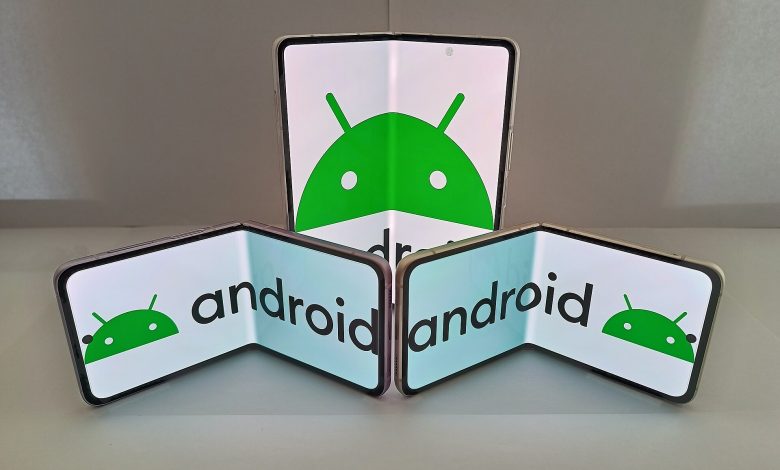
The first foldable phones were a magic trick you could buy: a screen that bent, a crease you could feel with your thumb, and a price that assumed your fascination would outlast both. Six generations later the trick has become a product category, and the newest models mark the moment the caveats started disappearing. The crease is shallower, the closed phone is barely thicker than an ordinary one, and the software — long the weakest act — has learned to use the big screen for more than two apps side by side.
Sales tell a maturing story. Foldables remain a single-digit share of the smartphone market, but they claim an outsized share of its profits and nearly all of its excitement, and their buyers report the highest satisfaction in the industry. The question has shifted from whether the form factor works to when its price stops confining it to the flagship shelf. Readers can follow more coverage like this on techmarsh.com.
Engineering the Crease Away
The crease was never one problem but three wearing a trench coat: the display stack, the hinge and the glass. Displays now use layered composites that distribute the bend across a wider radius; hinges shaped like water droplets let the screen fold in a teardrop loop rather than a hard V; and ultra-thin glass — real glass, folded — has replaced the fingernail-soft plastic of the early screens. Each iteration reduced the visible valley at the fold, and the latest are, in ordinary light at ordinary angles, effectively flat.
Durability, the other original sin, has been answered with statistics. Hinges are now rated in the hundreds of thousands of folds — a decade of heavy use — and water resistance, once unthinkable for a device with a moving seam, is standard at the top of the range. The repair question lingers: a foldable screen still costs more to replace than a slab’s, and manufacturers’ pricing of that fact varies from reasonable to ransom.
Software Was the Real Product
Hardware maturity exposed how little software had been doing with the extra space. The newest releases attack exactly that: taskbars that treat the open foldable like a small tablet, drag-and-drop between windows, and camera modes that use the folded half as a tripod and viewfinder. The tablet comparison is the point — the industry’s pitch has quietly changed from ‘a phone that unfolds’ to ‘the tablet that fits in your pocket’, and the apps optimised for the format have followed the money. Further data and analysis on this subject are available from the GSMA.
Productivity claims should be audited, and mostly they survive it. Reading, maps, documents, split-screen research and video calls all genuinely improve with double the canvas. What has not improved is one-handed use and pocket comfort in the closed state for the book-style models — physics collects its tax somewhere. The flip-style foldables, trading screen size for a pocketable square, exist precisely for buyers who rank that tax too high.
The Price Problem Is the Last Problem
Strip away the solved issues and one remains: foldables still begin where ordinary flagships end. The bill of materials explains it — two devices’ worth of engineering in one — but the market’s history suggests time is the solvent. Every smartphone technology from OLED to 5G began as a flagship tax and ended as a default, and component costs are already bending that way as panel yields improve and second suppliers enter.
The accessory and repair ecosystems tell the maturity story in miniature: cases, screen protectors rated for the fold, and authorised repair networks were afterthoughts for the first generations and are now launch-day infrastructure.
The foldable’s significance was never the fold. It is the first successful challenge to the slab — the shape that has defined phones for fifteen years — and proof the market still rewards a new idea executed patiently. The crease going away matters less than what its departure announces: the experiment phase is over. What remains is just competition. See also our companion piece: Matter Promised One Smart Home. It Is Finally Delivering.