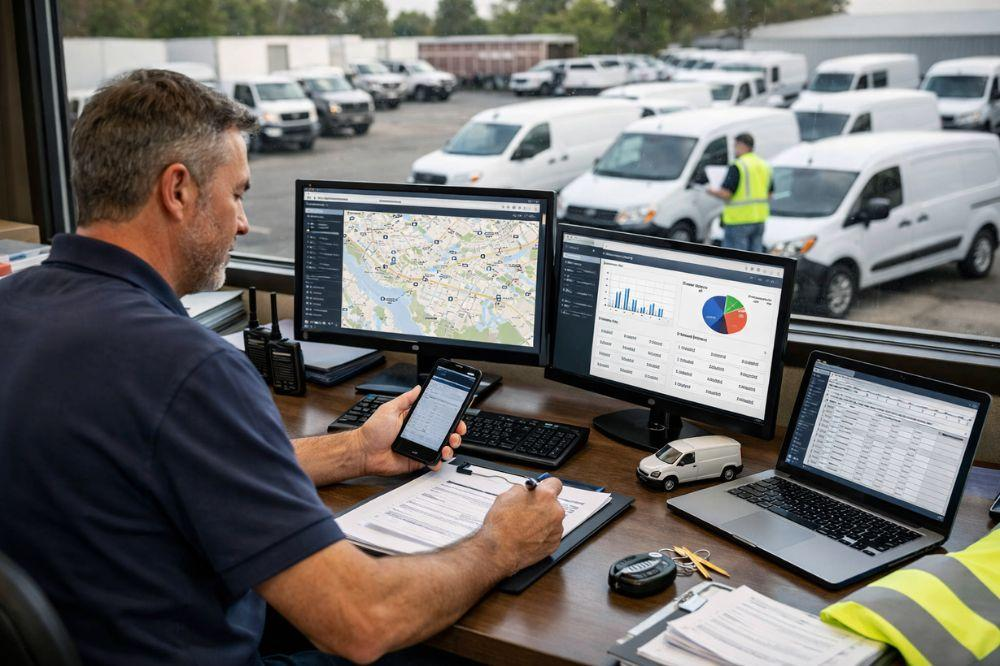
Managing a fleet of vehicles requires more than keeping drivers and vehicles on the road. Businesses also need to understand how their vehicles are being used, how much they travel, when they need maintenance, and where operating costs can be reduced.
When mileage is recorded manually, important information can be missed or entered incorrectly. Drivers may forget to record short trips, managers may struggle to compare vehicle usage, and maintenance schedules can become harder to manage.
Fleet Mileage Tracking provides a more organized way to monitor vehicle mileage and travel activity. By using digital tools or GPS-based systems, businesses can collect mileage information, review vehicle usage, and make better decisions about fleet operations.
In this guide, we’ll look at how mileage tracking works, how it supports fleet efficiency, and how businesses can use mileage data to improve cost control.
Understanding Fleet Mileage Tracking
Fleet mileage tracking is the process of recording the distance traveled by vehicles used for business purposes. It can involve simple odometer readings, digital mileage logs, or GPS-based tracking systems.
Depending on the method used, mileage records may include:
- Vehicle identification
- Driver information
- Date and time of travel
- Starting and ending locations
- Distance traveled
- Route information
- Business purpose
- Fuel usage
- Maintenance mileage
For a small fleet, mileage may be recorded manually. Larger fleets often benefit from automated systems that collect trip and distance information digitally.
The purpose is to create a reliable record of vehicle activity that managers can use for operational and financial decisions.
Why Mileage Data Matters to Fleet Managers
Mileage is more than a number on an odometer. It can provide insight into how vehicles are being used and how much activity each vehicle handles.
For example, two vehicles may be part of the same fleet, but one may travel 3,000 miles per month while another travels only 500 miles. Without mileage information, it may be difficult to identify this difference.
Regular mileage records can help fleet managers understand:
- Which vehicles are used most frequently
- Which vehicles are underused
- How much distance drivers typically cover
- When vehicles may require scheduled maintenance
- How mileage relates to fuel consumption
- Where unnecessary travel may be occurring
- Which vehicles may have higher operating costs
This information can support better day-to-day fleet management and longer-term planning.
How Mileage Tracking Works in a Business Fleet
There are several ways businesses can collect mileage information.
Odometer-Based Records
The simplest approach is to record the vehicle’s odometer reading at regular intervals. Drivers or fleet managers can record beginning and ending readings to calculate the distance traveled.
This method is inexpensive but provides limited information about individual journeys.
Driver-Entered Mileage Logs
Drivers can record each business trip using a paper form, spreadsheet, or digital form.
This approach can provide more detail than an odometer reading, but its accuracy depends on drivers entering information consistently.
GPS-Based Tracking
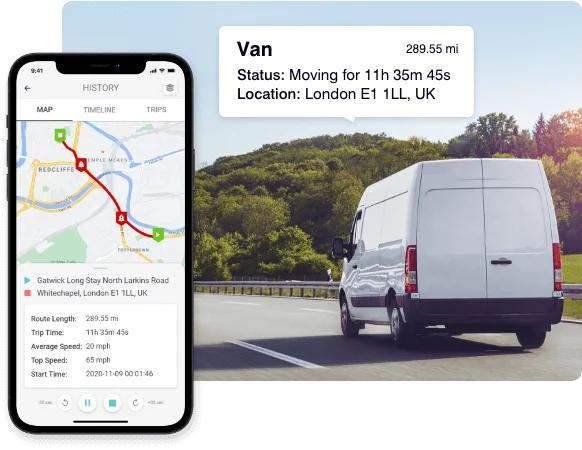
GPS-enabled tracking can automatically record vehicle movement and calculate trip distances. Depending on the system, managers may also be able to view routes, trip times, stops, and other information.
This can reduce manual work and provide more detailed data for larger fleets.
8 Ways Mileage Tracking Can Improve Fleet Efficiency
1. Reveals How Vehicles Are Actually Being Used
Fleet managers need to know whether vehicles are being used efficiently.
Mileage data can reveal which vehicles are heavily used and which spend most of their time idle. This can help managers distribute work more effectively.
For example, if one vehicle consistently accumulates significantly more mileage than others, its workload, maintenance needs, and replacement timeline may need closer attention.
Understanding actual utilization can also help businesses determine whether their current fleet size matches operational requirements.
2. Helps Plan Maintenance Before Problems Escalate
Vehicle maintenance is closely connected to mileage.
Oil changes, inspections, tire checks, and other maintenance tasks may be recommended according to mileage intervals or time periods.
With accurate mileage records, fleet managers can identify vehicles approaching important service intervals and schedule maintenance accordingly.
This can help reduce the risk of missed maintenance and unexpected downtime.
However, mileage should not be the only factor considered. Businesses should also follow manufacturer recommendations and account for vehicle age, operating conditions, and other maintenance indicators.
3. Makes Fuel Consumption Easier to Analyze
Fuel is one of the largest recurring expenses for many vehicle-based businesses.
Mileage tracking provides the distance data needed to compare travel with fuel purchases.
For example, if a vehicle normally travels a certain number of miles per gallon but suddenly shows a significant decline in efficiency, the fleet manager can investigate.
Possible factors may include:
- Excessive idling
- Heavy loads
- Traffic conditions
- Tire pressure
- Vehicle maintenance issues
- Longer routes
- Changes in driving patterns
Mileage data does not identify the cause by itself, but it can highlight patterns that deserve attention.
4. Helps Identify Inefficient Routes
Longer routes mean more mileage, fuel consumption, and vehicle wear.
GPS-based mileage records can help businesses understand common routes and identify trips that consistently involve unnecessary distance.
Managers can use this information to review route planning and determine whether alternative routes or better scheduling could reduce travel.
Even small reductions in unnecessary mileage can become meaningful when repeated across an entire fleet.
5. Supports Better Vehicle Allocation
Not every vehicle is suitable for every type of work.
A high-mileage vehicle may be better suited to certain assignments, while a lower-mileage vehicle may be appropriate for shorter local journeys.
Mileage data can help managers understand how vehicles are being allocated and whether workloads are distributed appropriately.
This can support more balanced fleet utilization and help businesses make informed decisions about vehicle replacement.
6. Provides Better Visibility Into Fleet Costs
Vehicle expenses can be difficult to analyze when information is stored in separate systems.
Mileage data can be compared with:
- Fuel expenses
- Maintenance costs
- Repair bills
- Insurance costs
- Vehicle utilization
- Driver activity
Looking at these figures together can help businesses understand the true operating cost of each vehicle.
For example, a vehicle with unusually high mileage and maintenance expenses may require a closer review than one with low usage and predictable costs.
7. Supports Accurate Mileage-Based Reporting
Businesses may need mileage information for internal reporting, reimbursement, accounting, or applicable tax-related recordkeeping.
Organized mileage data makes it easier to prepare reports without reconstructing trips from memory.
For tax purposes, businesses should always follow the current requirements that apply to their location and circumstances. Mileage tracking provides records, but it does not automatically determine whether a particular trip qualifies for a deduction.
8. Helps With Long-Term Fleet Planning
Mileage trends can provide useful information when businesses plan future vehicle purchases or replacements.
If certain vehicles consistently accumulate high mileage, managers can estimate when they may reach replacement thresholds or require more frequent maintenance.
At the same time, consistently underused vehicles may indicate an opportunity to reconsider fleet size or vehicle allocation.
Using real mileage data can make these decisions more informed.
GPS Tracking vs. Manual Fleet Mileage Logs
Both manual and automated mileage tracking methods have a place in fleet management.
Manual logs are inexpensive and straightforward. They can work well for small fleets where vehicles make relatively few trips.
However, manual tracking requires drivers to remember every journey and enter the information correctly. As the fleet grows, collecting and reviewing these records can become increasingly difficult.
GPS-based tracking can automate much of the process. It can record routes, calculate distances, and create digital trip histories.
The trade-off is that GPS systems require appropriate devices, permissions, configuration, and data management. Location information also needs to be handled responsibly.
For many businesses, the right approach depends on fleet size, travel frequency, reporting requirements, and operational needs.
What Should a Fleet Mileage Tracking System Record?
A useful tracking system should capture information that helps managers understand vehicle activity without creating unnecessary complexity.
Important information may include:
Vehicle and Driver Details
Each trip should be associated with the appropriate vehicle and, where relevant, the responsible driver.
Trip Distance
Distance traveled is the foundation of mileage tracking and can be used for utilization, maintenance, and cost analysis.
Route and Location Information
GPS-based systems may provide route information that helps managers understand travel patterns.
Trip Dates and Times
Time information can help businesses understand when vehicles are being used and identify scheduling patterns.
Business Purpose
Recording the purpose of business trips can provide useful context for reporting and recordkeeping.
Expense Information
Where supported, mileage can be reviewed alongside fuel, parking, tolls, and other vehicle expenses.
Best Practices for Managing Fleet Mileage Data
Collecting mileage information is only useful when the data is accurate and consistently reviewed.
Businesses can improve their mileage management by following a few simple practices:
- Review vehicle mileage regularly.
- Compare mileage with fuel consumption.
- Monitor approaching maintenance intervals.
- Investigate unusual mileage patterns.
- Correct inaccurate trip records.
- Keep vehicle information up to date.
- Establish clear policies for drivers.
- Train employees on mileage recording procedures.
- Protect access to location information.
- Keep important reports backed up.
Regular analysis is more valuable than simply collecting large amounts of unused data.
Common Fleet Mileage Tracking Problems
Even businesses with tracking systems can experience recordkeeping problems.
Missing Trips
A tracking system may fail to capture a journey because of device, GPS, battery, or permission issues.
Incorrect Classifications
A business trip may accidentally be marked as personal, or vice versa.
Inaccurate Routes
GPS information can sometimes produce an unusual route or distance that requires review.
Inconsistent Driver Practices
When drivers use different methods for recording mileage, fleet data can become difficult to compare.
Poor Data Management
Collecting mileage information without reviewing or organizing it can limit its usefulness.
Having a clear process for checking and correcting mileage records can help address these issues.
Who Can Benefit From Fleet Mileage Tracking?
Mileage tracking can be valuable for businesses that operate vehicles regularly, including:
- Delivery companies
- Field service businesses
- Construction companies
- Landscaping businesses
- Sales teams
- Repair and maintenance companies
- Transportation businesses
- Healthcare service providers
- Utility contractors
- Companies with employee vehicles
The more vehicles and business trips an organization manages, the more valuable organized mileage data can become.
Final Thoughts
Fleet Mileage Tracking can help businesses gain better visibility into how their vehicles are being used and how that usage affects operating costs.
Accurate mileage information can support maintenance planning, fuel analysis, route management, vehicle allocation, expense reporting, and long-term fleet planning. GPS-based systems can make this process easier by reducing manual data entry and providing more detailed trip information.
However, mileage tracking should be part of a broader fleet management strategy. Businesses should combine mileage information with fuel costs, maintenance records, vehicle utilization, and other operational data to make well-informed decisions.
The goal is not simply to record more miles. It is to understand what those miles mean for the business. With consistent tracking and regular analysis, mileage data can become a practical tool for improving fleet efficiency, reducing unnecessary expenses, and managing vehicles more effectively.